Custom AI models,trained on your data,owned by you.
When an off-the-shelf model is too slow, too expensive, too generic or not allowed to see your data, we build one that fits. That can mean fine-tuned language models, classifiers, extraction models or computer vision, evaluated properly and deployed where your data lives.
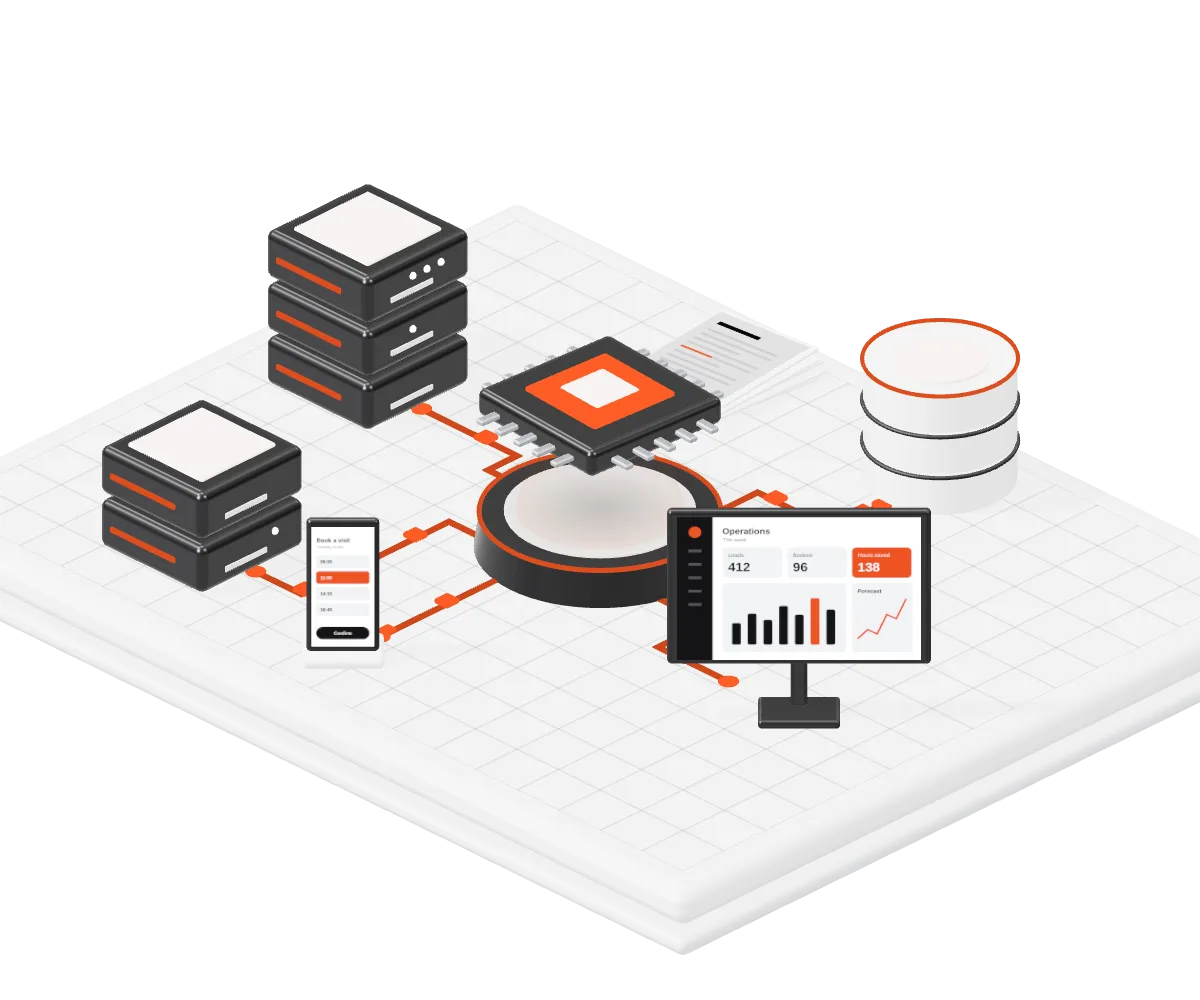
Most companies do not need their own model. The ones that do usually need it for one of four reasons: accuracy, cost at volume, privacy, or a task general models were never trained for.
A general-purpose model such as GPT or Claude is often the right starting point, and we will say so. But some situations change the maths. You might process millions of documents a month, where per-call API costs add up. Your terminology might be so specialised that general models stumble. Regulation might mean data cannot leave your servers. Or the task might be visual, such as spotting defects, reading meters or counting stock.
In those cases a smaller model trained for your exact task can be more accurate, many times cheaper to run and fully under your control. We have seen a fine-tuned small model match a frontier model on a narrow classification task at a fraction of the running cost. That is the kind of result worth a custom model.
We start by proving a custom model will win
Before training anything, we build a baseline with an existing model and measure it on your data. The custom model has to beat that baseline on the metric you care about, whether that is accuracy, latency, cost per thousand predictions or the ability to run offline. If it cannot, you have saved the cost of training.
Models we build
Fine-tuned language models
Open-weight models such as Llama, Mistral or Qwen, fine-tuned with LoRA on your examples to follow your format, tone and terminology, and served from your own infrastructure.
Text classification and routing
Models that sort tickets, emails, reviews, claims or transactions into your categories at high volume and low cost, with confidence scores for human review.
Information extraction (NLP)
Named-entity recognition and structured extraction from contracts, medical notes, CVs, invoices and reports, tuned to the fields your systems need.
Computer vision
Image classification, object detection and segmentation for quality inspection, stock counting, damage assessment, document layout and reading meters or labels.
Search and recommendation
Custom embedding models and re-rankers that make search and "similar items" understand your products and your customers' language.
Speech and audio
Transcription tuned to your accents and vocabulary, call summarisation and call classification for sales and support teams.
How a custom model gets built
Baseline and data review
We measure an existing model on your task, audit your data for volume, quality and bias, and agree the target metric in writing.
Data preparation
Cleaning, de-duplication, labelling guidelines and, where needed, a labelling workflow for your team or ours, plus a held-out test set nobody trains on.
Training and evaluation
Iterative training runs compared against the baseline, with error analysis that shows where the model fails and why, not just a single accuracy number.
Deployment and MLOps
Packaged as an API inside your cloud or on-premise, with versioning, monitoring for drift and a documented retraining process.
Frameworks and infrastructure
Training
- PyTorch
- Hugging Face Transformers
- PEFT / LoRA
- scikit-learn
- XGBoost
- Ultralytics YOLO
Serving
- vLLM
- ONNX Runtime
- TorchServe
- FastAPI
- Docker
- Kubernetes
Cloud and MLOps
- AWS SageMaker
- Google Vertex AI
- Azure Machine Learning
- MLflow
- Weights & Biases
Data
- Label Studio
- PostgreSQL
- BigQuery
- Snowflake
- S3 / GCS data lakes
Responsible by design, including the EU AI Act
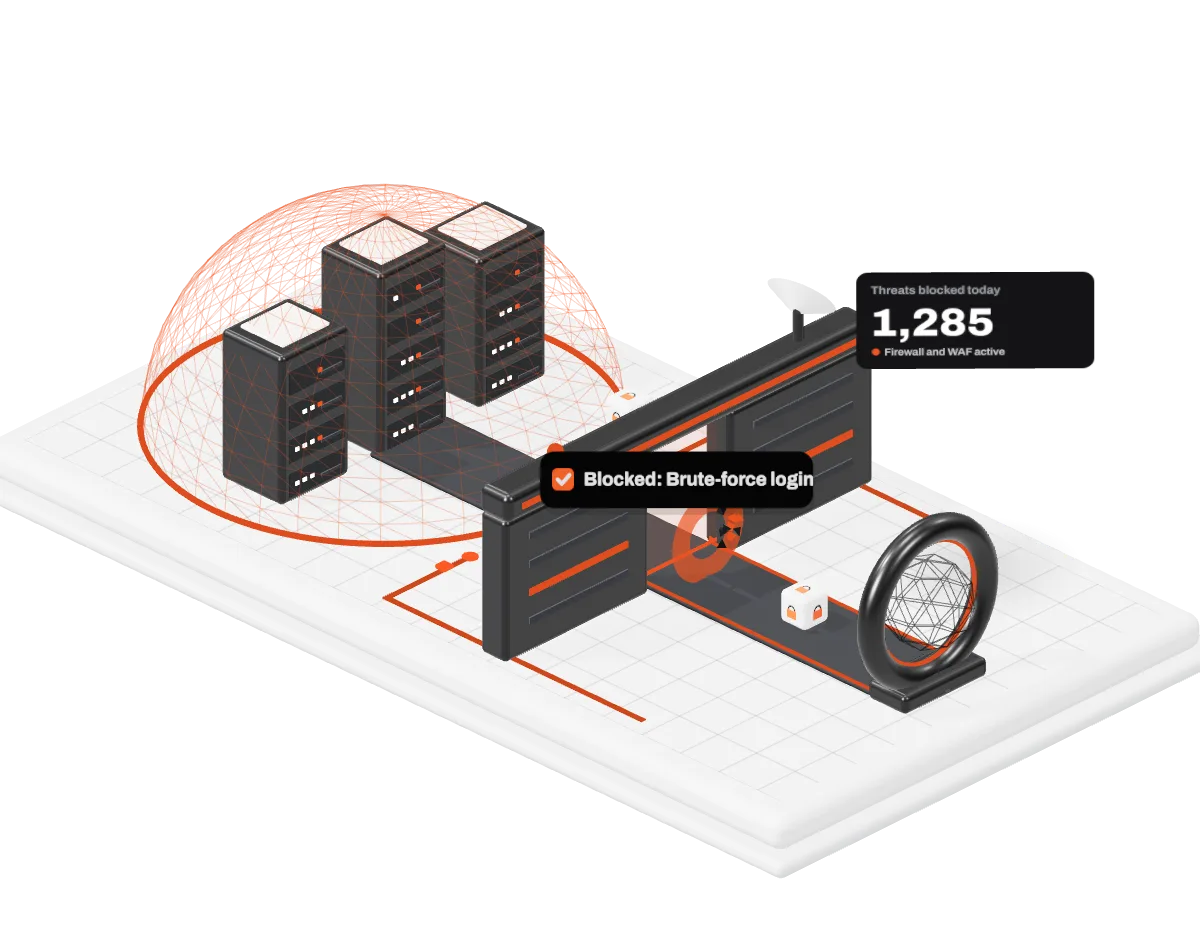
Some AI uses are regulated more heavily than others. Under the EU AI Act, systems used for things like recruitment, credit decisions or access to essential services are classed as high-risk, with obligations that now apply from 2 December 2027. Certain uses, including some forms of biometric identification and emotion recognition at work, are restricted or prohibited outright.
If you are building anything that recognises faces, judges people or makes decisions about them, we review the legal position with you before collecting data. Some projects need a lawyer as well as an engineer, and we will tell you when yours does. We document training data sources, test for bias across relevant groups and keep the records regulators expect.
Common questions
When should a business build a custom AI model instead of using ChatGPT or Claude?
When a measured baseline shows a general model is not accurate enough on your task, too expensive at your volume, too slow, or not permitted to see your data. Typical cases are high-volume classification or extraction, specialist terminology, visual inspection tasks and strict data-residency requirements.
How much data do we need to train a custom model?
It depends on the task. Fine-tuning a language model for format and tone can work with a few hundred to a few thousand good examples. A reliable classifier usually needs a few hundred labelled examples per category. Computer vision projects often need thousands of labelled images, although pre-trained models reduce that considerably.
Can a custom model run on our own servers?
Yes. Smaller open-weight language models and most classification and vision models can run on your own GPU servers, inside your private cloud, or in some cases on edge devices, so data never leaves your environment.
Who owns the trained model?
You do. Training code, datasets you supplied, labelling guidelines and the final model weights are delivered to repositories and storage you control, subject to the licence terms of any open-weight base model we started from, which we explain up front.
How do you keep a model accurate over time?
We monitor input data and prediction quality after launch. When the real world shifts, for example with new products, new document templates or seasonal changes, the model is retrained on fresh labelled data using a documented, repeatable process.
Related services
AI development
Assistants, copilots and AI features built on your own data.
Prediction models
Forecast demand, churn, no-shows and lead quality from your data.
AI automation and agents
Agents that take repetitive work off your team, with a human in the loop.
Web apps and SaaS
MVPs, SaaS platforms, portals and internal tools.
Not sure if you need a custom model?
Send us a description of the task and a few examples. We will tell you whether an existing model is good enough, and what a custom one would gain you if it is not.